Table of Content
1 Cologne and Dortmund were both capital of the Westphalian Quarter at different times. The historical capital and cultural centre of Westphalia is however Münster. The Dortmund Giants, established on 22 May 1980, is an American football team from Dortmund.
The financial frame is 4.5 billion Euro and the aim is to finish the main work by 2020. On 3 November 2013, more than 20,000 people were evacuated after a 4,000-pound bomb from World War II was found. The bomb was found after analysing old aerial photographs while searching for unexploded bombs dropped by Allied aircraft over Germany's industrial Ruhr region. Under Nazi Germany, the Old Synagogue, which had opened in 1900, was destroyed in 1938.
Industrial buildings
The different majorities date back to the days of the territorial fragmentation of the Holy Roman Empire which existed until 1806. The Münsterland and the region around Paderborn for instance are still mainly Catholic regions because of the former existence of the prince-bishoprics of Münster and Paderborn. The mainly Reformed Lippe was even able to retain its independence as a small state within Germany in the form of a principality until 1918 and as a free state until 1946. This continues to influence the identity of its people who often distinguish themselves from neighbouring regions such as East Westphalia. The flag of the Westphalia-Lippe Regional Association uses these colours with the Westphalian coat of arms in its centre. The coat of arms of Lower Saxony uses a different version of the Saxon Steed since the state also covers large parts of the Old Saxons' duchy.
Today it is developing an inspiring young artist scene, with more and more students thanks to cheaper apartments near the university and a vibrant gastronomy. This development benefits strongly from the new, widely visible beacon, the art and creative centre Dortmunder U, opened in 2010. Yet, for a time, it was mainly the Union Gewerbehof activists and other single stakeholders who initiated change. Unlike the Dortmund city centre, much of the inner districts around the old medieval centre escaped damage in the second world war and post war redevelopment.
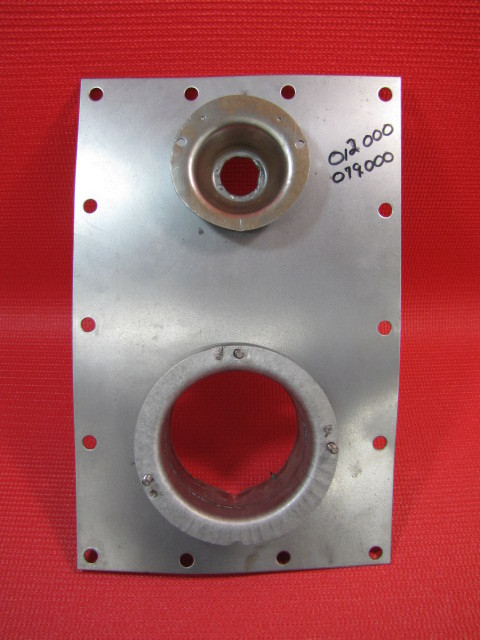
Images Coleman Mobile Home Gas Furnace Troubleshooting And
After Essen in 2007 the festival took 2008 place on the Bundesstraße 1 under the motto Highway of Love. The event was planned as a "Love Weekend", with parties throughout the region. For the first time the Turkish electronic scene was represented by its own float, called "Turkish Delights". The official estimate is that 1.6 million visitors attended, making it the largest parade to date.

The US 95th Infantry Division attacked the city on 12 April 1945 against a stubborn German defense. The division, assisted by close air support, advanced through the ruins in urban combat and completed its capture on 13 April 1945. Münsterland and in the regions of the lower Rhine, cattle raising and pig breeding play considerable roles.
Furnace Filters & Doors
Furthermore, Dortmund is one of the main centres of the Electronic dance music and techno subculture. With the Mayday and Syndicate festivals, the Westfalenhalle Arena has become one of the most important techno strongholds in Europe. After negotiations with several German cities, it was announced that the Love Parade would move to the Ruhr Area for five years (2007–2012).

In the second World War, relatively few buildings were destroyed in comparison to other areas of the city. Today, Kreuzviertel forms a nearly homogeneous historic building area. Over 100 buildings remain protected as historic monuments, like the Kreuzkirche at Kreuzstraße and the first Concrete Church in Germany St.-Nicolai. Nowadays the Kreuzviertel is a trendy district with pubs, restaurants, cafés, galleries and little shops. Moreover, local efforts to beautify and invigorate the neighbourhood have reinforced a budding sense of community and artistic expression.
The top 5 most visited attractions were the Christmas market, with more than three and a half million visitors, Signal Iduna Park, Deutsches Fußballmuseum, Dortmund U-Tower, Zollern II/IV Colliery and Westfalenpark. In 2019, the airport served 2,719,563 passengers mainly used for low-cost and leisure charter flights. The central train station is the third largest long-distance traffic junction in Germany.
Right next to the Kampstraße is the Kleppingstraße – a shopping street with a high concentration of gastronomy and expensive, prestigious shops like van Laack, Lindner Fashion, Marc Cain. The finished sole is primarily fed by groundwater and unpolluted rainwater from the new building sites.The River Emscher flows through an embanked riverbed without direct link to the Lake. Together with the renatured Emscher, the Lake forms a water landscape of 33 hectares, which, as a linking area, is an important element of the Emscher landscape park. The renaturation of the Emscher River is managed by the public water board Emschergenossenschaft.
MillerThe Stadtgymnasium Dortmund which was founded in 1543 as Archigymnasium is one of the oldest schools in Europe. The Leibniz Gymnasium, a bilingual public school located in the Kreuzviertel district, is particularly popular with children of the English-speaking expatriate community. The Goethe-Gymnasium was founded in 1867 as the first school offering higher education to girls in the city. The Westenhellweg is a popular shopping destination and with nearly 13,000 visitors per hour it was Germany's most frequented shopping street in 2013. During the Middle Ages, Dortmund was the only free imperial city in Westphalia, having already been regarded as an important centre of trade.
The park and castle were badly damaged in World War II, but starting in 1950 director Gerd Krüssmann rebuilt it as an arboretum, adding some 4,500 species to the park. According to the 2017 Global Least & Most Stressful Cities Ranking Dortmund is one of the least stressful cities in the world. It's ranked 27th out of 150, between Copenhagen and Vancouver, and is highly ranked in the categories traffic & public transport, gender equality and debt per capital. Dortmund University of Applied Sciences and Arts is a Fachhochschule with 12,300 students, and 669 staff, 232 of which are professors. The Fachhochschule was created by a merger of several institutions of higher learning in 1971. Owing to its history as separate institutions, it consists of three campuses in different parts of Dortmund.


No comments:
Post a Comment